
In my laser tattoo removal training course I discuss a case which happened to me many years ago (about 32, or so). A partially red tattoo was treated by our QS ruby laser using the standard parameters of the day (about 6 J/cm^2 in a 25ns pulse).
When the patient returned for his second session, the red ink had turned black (see images). We were surprised as we had not seen this kind of reaction before. Mind you, this was 1991!!
I used all my ‘not at all surprised’ skills to reassure the patient that this was quite normal and nothing to be concerned about. Of course, we had no real idea at that time!!!
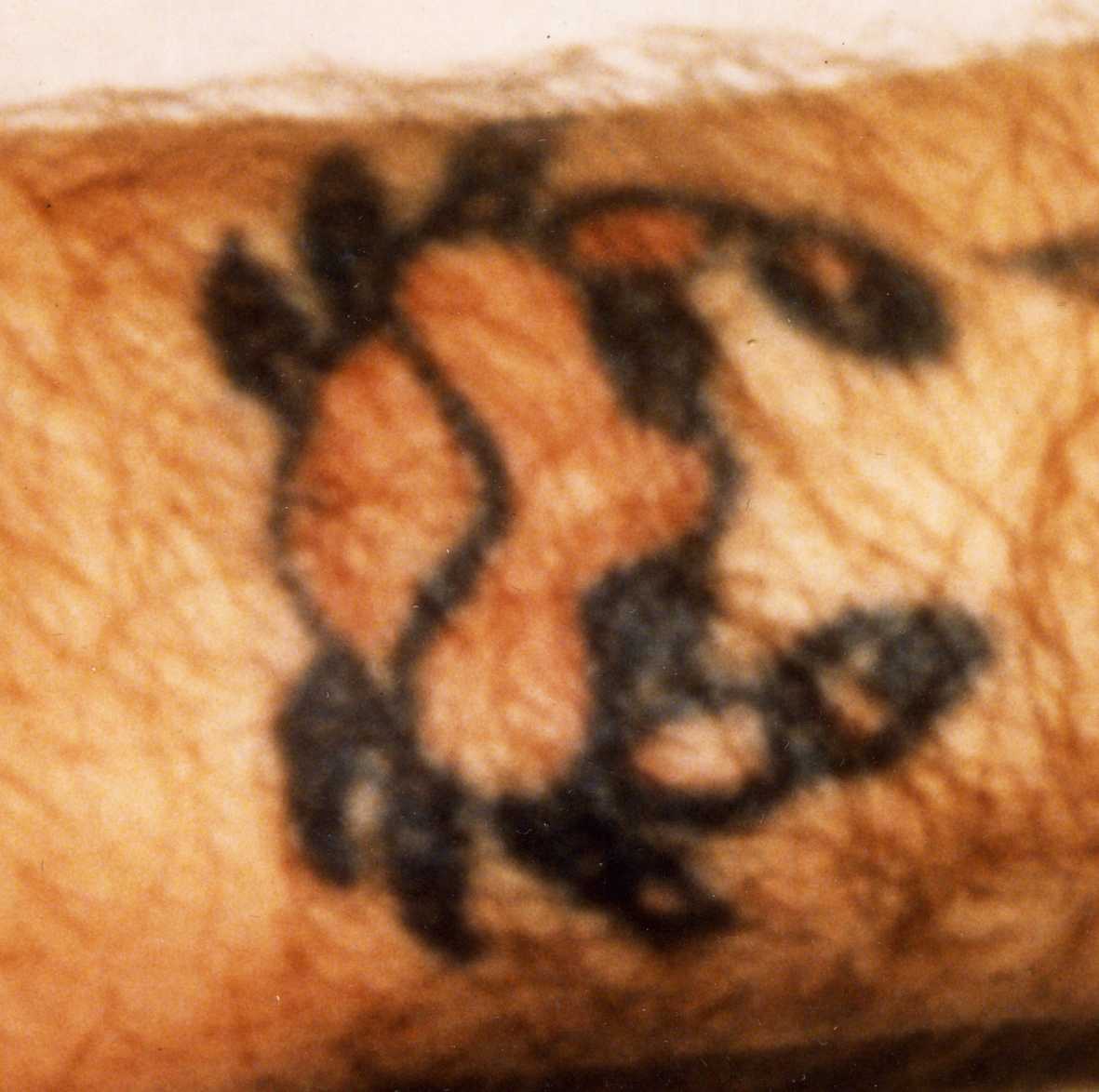
Fortunately, after a few more sessions the red also disappeared. Which, of course, we fully expected…
We later learned that there are many forms of iron oxides including FeO (iron oxide), Fe2O3 (haematite) and Fe3O4 (magnetite), plus many more. These range in colours from red, to orange to black.
The laser interaction induced a significant temperature rise in the ink which must have caused a change of state from one form of the oxide to another, and changed the colour in the process.
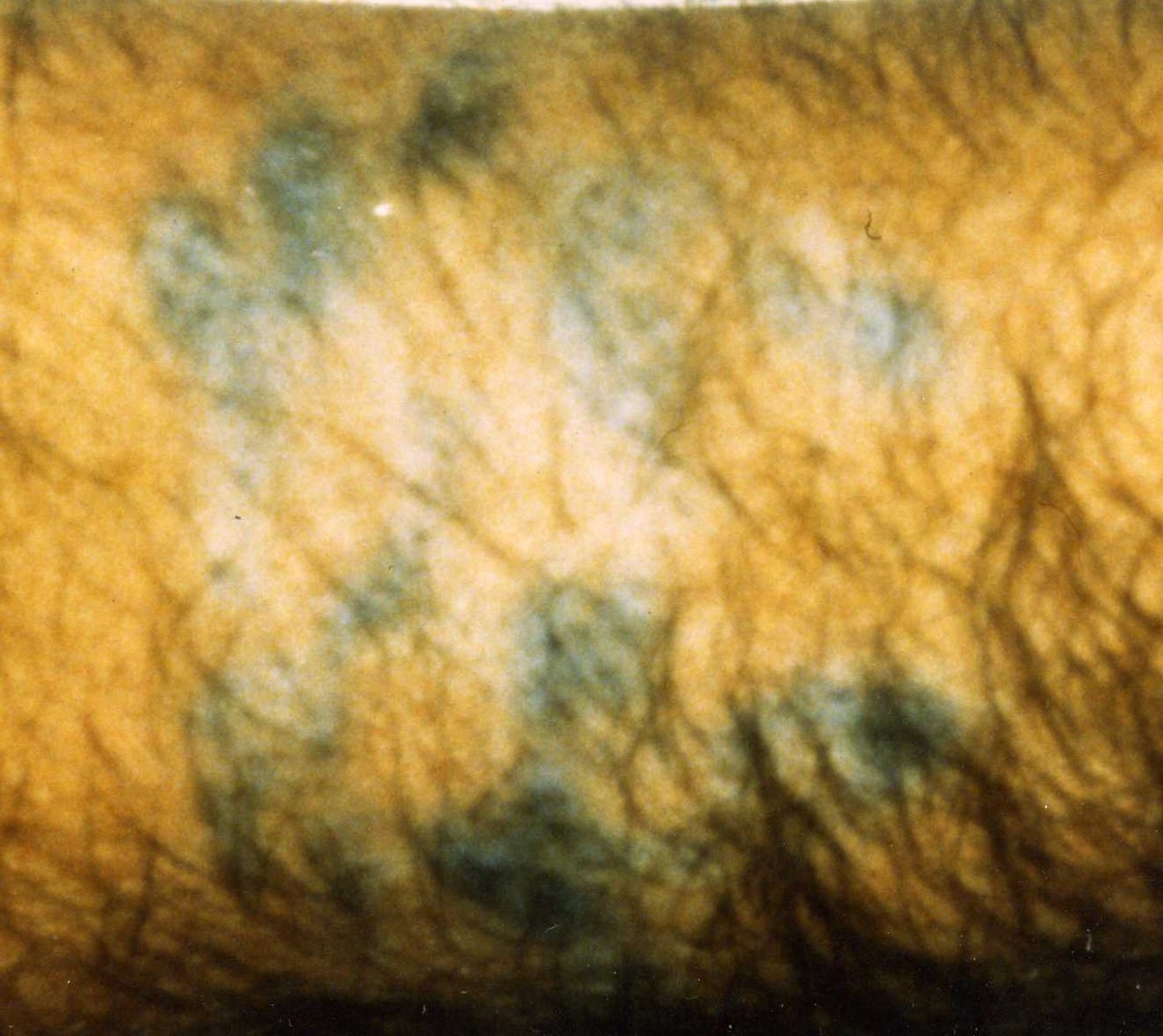
After around 12 sessions, or so, we finally acheived a reasonable result:
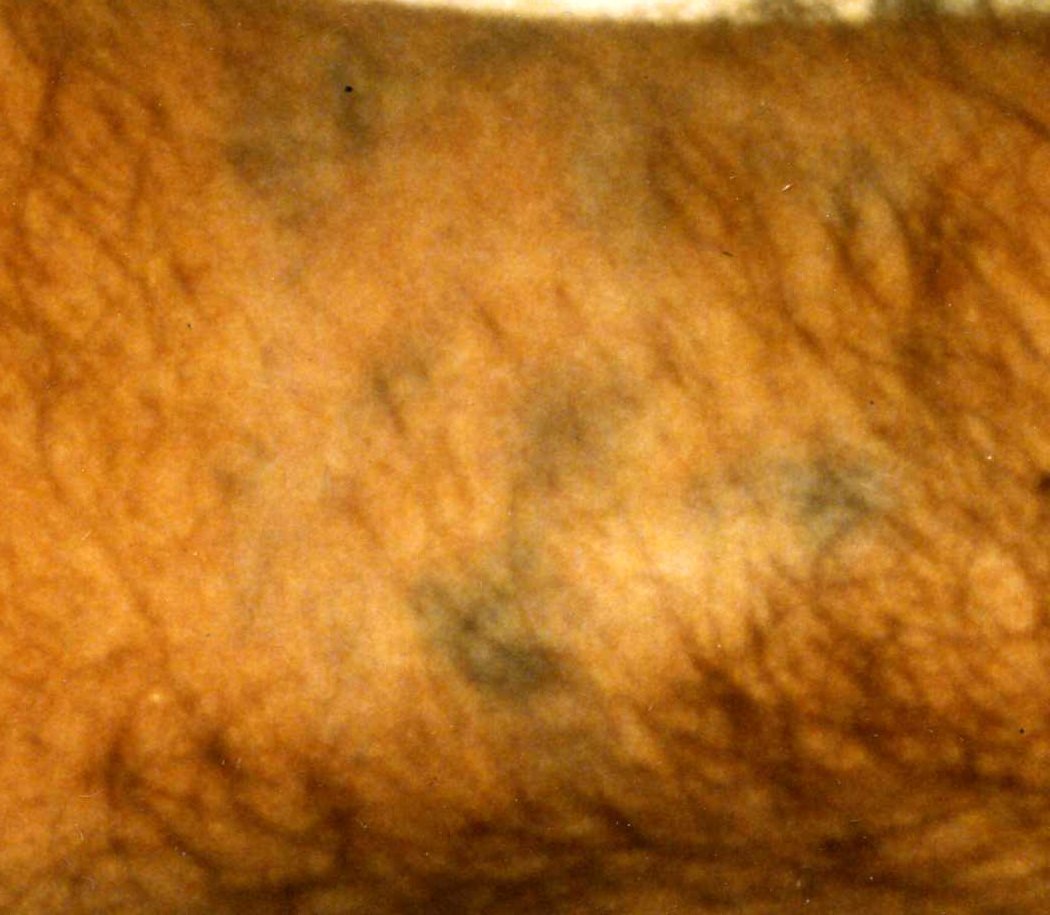
There were still some bits of visible ink but these were deep and beyond the reach of this laser. However, our patient was very pleased with this result since it is was no longer an obvious tattoo.
We also pointed out that his hair would grow back since we knew that QS lasers could not destroy hair follicles (the pulses are too short!!).
I often hear comments such as ‘the ink has oxidised’. I’m just a physicist – I don’t understand that chemistry stuff. It’s a black art to me…
All I know is that a number of inks can exist in different oxidative states – that’s the number of oxygen atoms in each molecule, to you and me! This can alter the ink’s absorption and scattering coefficients (or, colour – now we’re talking…)
Interestingly, on this same patient’s arm was the tattoo below:
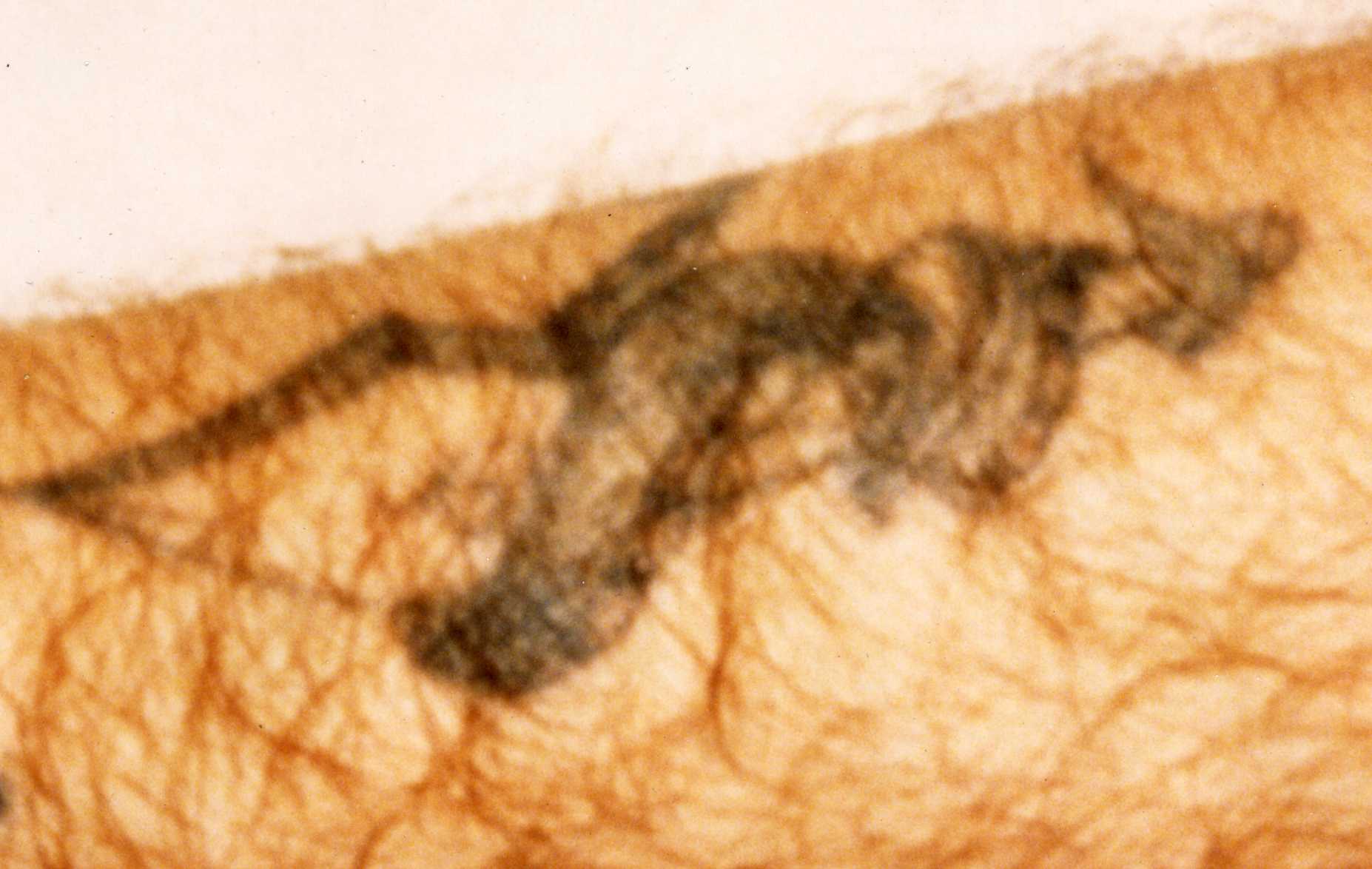
This was located just above the ‘crab’ tattoo above. This chap had been a sailor previously and these two tattoos were applied in two different ports, at two different times.
Consequently, they responded quite significantly differently to the treatment.
The ‘dagger’ tattoo faded quite readily, while the ‘crab’ tattoo lingered for much longer. In fact, it only required 9 repeat session, using the same laser parameters are above, to produce the final result (below).
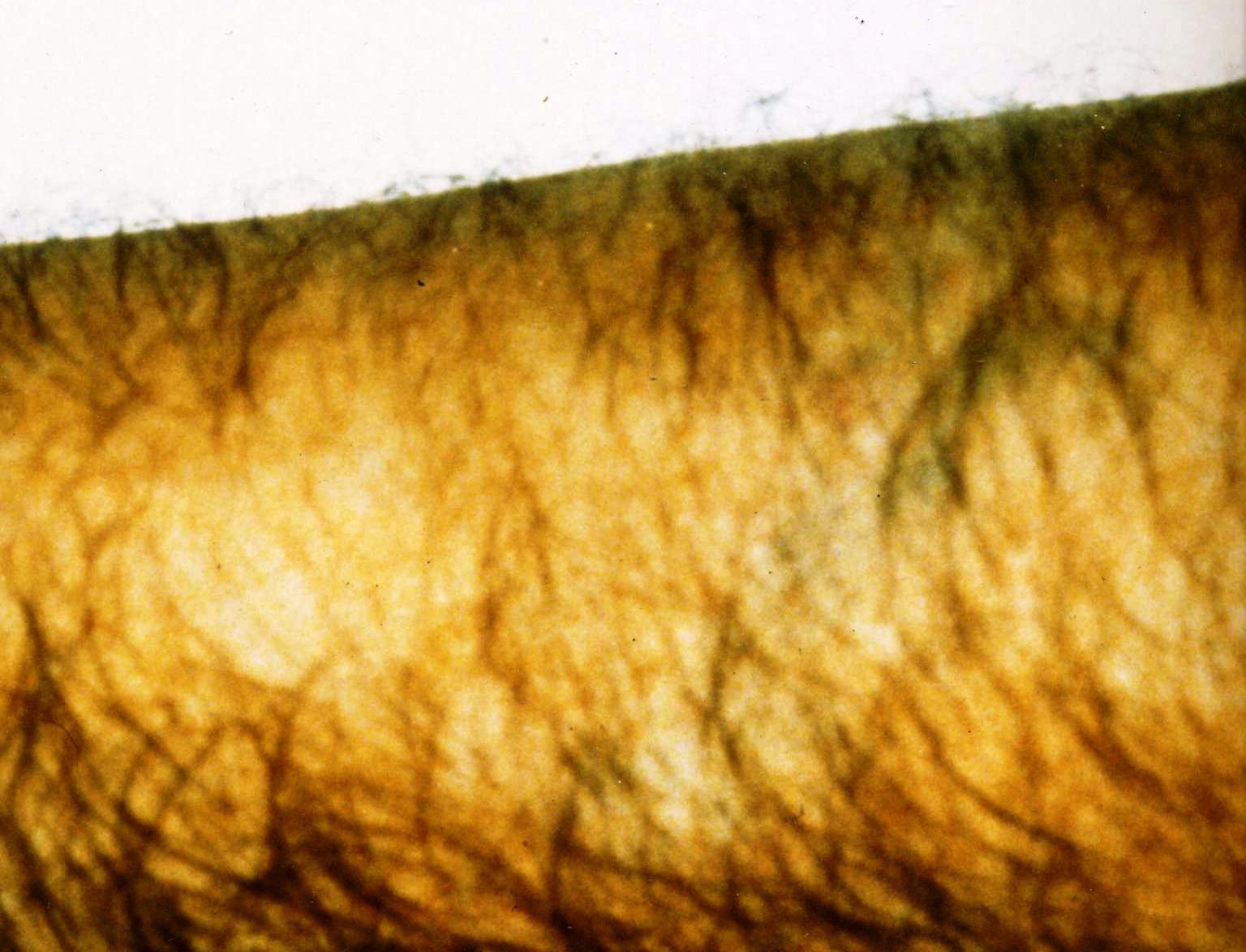
The interesting point here is that two quite different tattoos, applied by two different tattoo artists, reacted quite differently even though they were on the same body area on this patient.
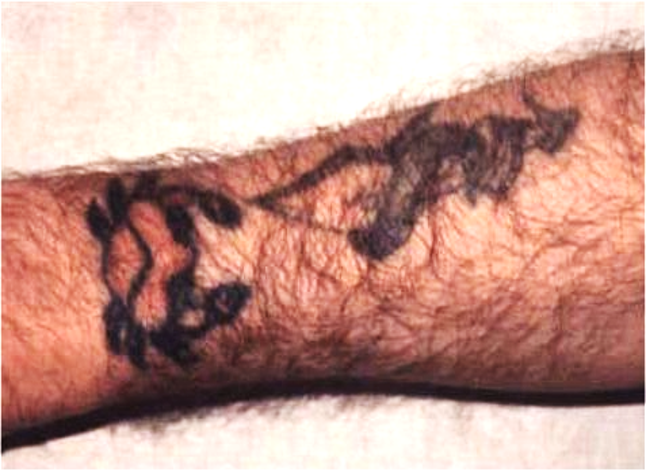
This indicates that the amount and depth of ink are important in such treatments, in addition to the actual ink constituents (which we can never know!)
Conclusion
It is impossible to predict how any particular tattoo is going to respond to laser treatment. We can only go by previous experiences and make a judgement. But, ultimateey, it is always a ‘guess’ and may be quite wrong if the tattoo ink isn’t where it ‘should be’ or made up of something a bit different.
Hope this helps,
Mike.



 Mike Murphy's Blog