
AI will take over the world and make us all their slaves, in the future…
But, in the meantime, let’s have a bit of fun. I asked ‘AskGPT.ai’ to draw an image of a bunch of tattoo particles, in an aggregate, inside a macrophage, with a laser hitting it and to show some steam around it – this is my theory behind laser tattoo removal.
The tissue water surrounding the ink aggregates boils soon after the ink has absorbed some laser energy. It rapidly forms steam bubbles which expand furiously fast – up to twice the speed of sound!!
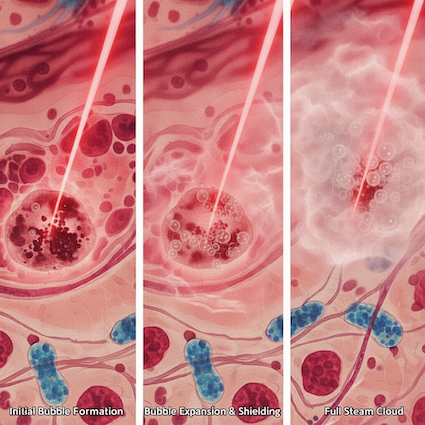
As a consequence, the macrophages burst apart, spilling their contents into the dermis. Ink particles fly out in all directions and some even leave the skin at high speed. Note that the individual ink particles do not shatter or break down – they are far too small to do that with the energy that we fire at them. However the aggregates fall apart easily.
Interestingly the steam bubble formation occurs very rapidly – typically within less than one nanosecond. As soon as the bubbles form the laser beam starts to be reflected since steam is highly reflective. This means that the ink does not absorb all of the energy, only a relatively small fraction. My calculations show that the tattoo ink will absorb more of a picosecond pulse compared to a nanosecond pulse. This probably explains why picosecond lasers are a little bit better than Q-switched lasers – but I reckon by only about 15 to 20%.
Once a sufficient volume of steam is formed, it essentially behaves like a mirror. I call this the ‘steam mirror’, and it blocks any further light energy from reaching the ink. It also prevents light energy from reaching deeper targets in the dermis. This is basically why tattoo removal requires a number of repeat sessions.
The pain that people feel during this treatment is mostly due to the high-speed ink particles ripping through their skin. As it does so it will tear through hair follicles, blood vessels, and nerves. This is why this treatment is painful.
After all that the dermis essentially looks very similar to the time when the tattoo was first injected. It’s a bit of a mess. The inflammatory response kicks in and a whole bunch of new macrophages and fibroblasts then come in to try to clean up this mess. But they can only remove a certain percentage of the total ink present.
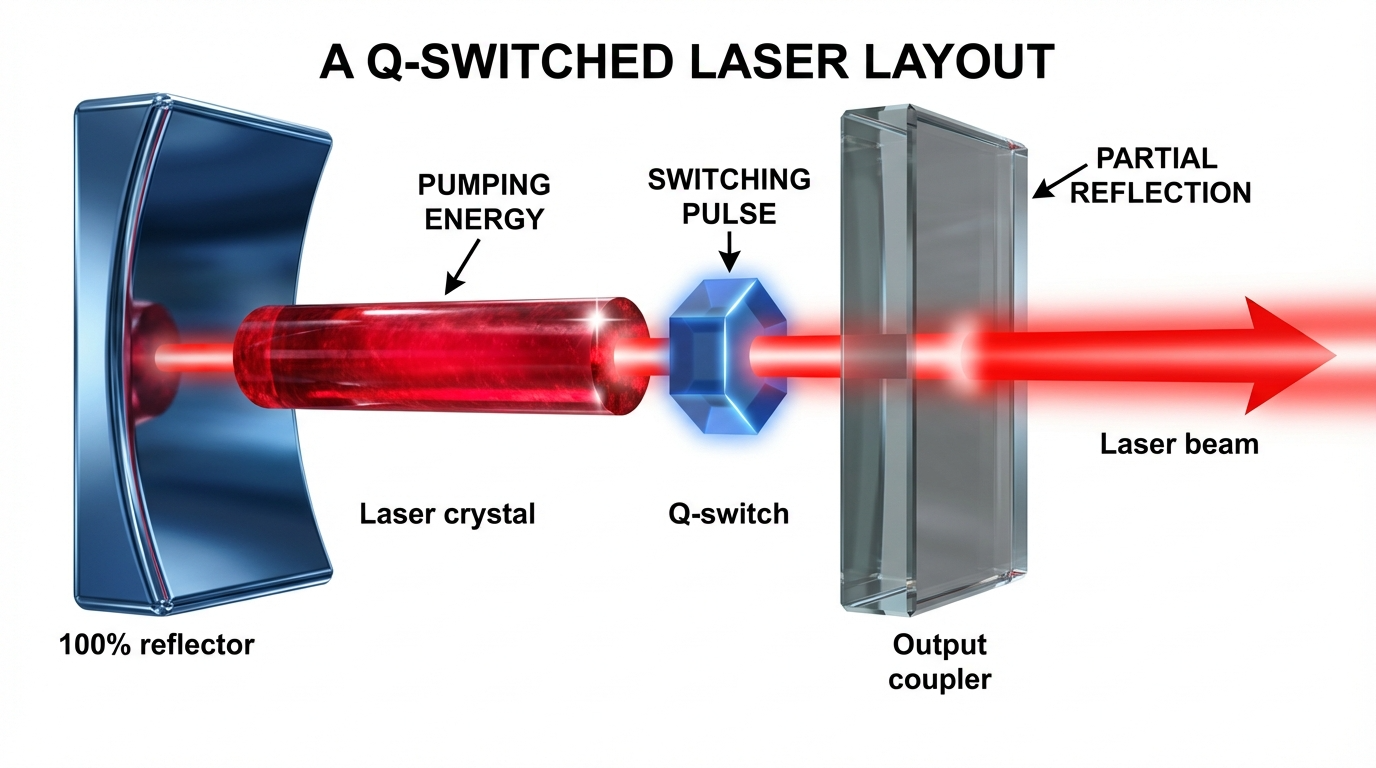
The above AI images are not bad – but they’re better than my drawings! The tattoo image is not great but I suppose it’s a reasonable first attempt. I’ll see if I can generate something a little better.
And remember until AI becomes our overlords and masters, we can have a bit of fun with it and maybe even generate a little bit of science.
That’s all for now folks,
Mike.
Don’t forget to drop in on our podcast “Lasers in Skin” with myself and Lisa – new episodes out every Thursday. You can find it on Apple, Spotify, and any other decent podcast host.





Brilliant, as always!
We thought we’d try something similar; you can check out our result on our Facebook page (SkinteX Laser Clinic).
m